Mars From Delaware
Planetary Observation
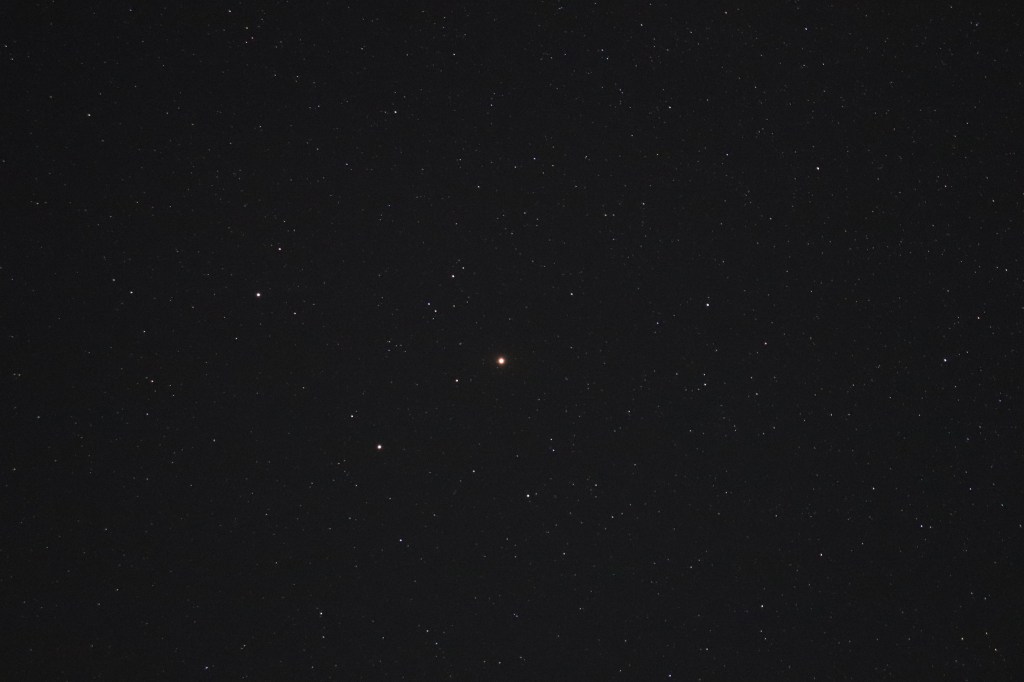
Image of Mars captured by Justin Stout from DSpOC using a DSLR camera.
As we look into the night sky, we may have the privilege of catching a glimpse at a small, red, solid dot as shown in the photo above, which can easily be mistaken for a star by the naked eye. But this is no star, as you’ll soon come to realize if you compare its solid image in the night sky against the numerous flickering stars behind it. This is one of Earth’s neighboring worlds, the planet we’ve named Mars.
Mars, named after the ancient Romans’ God of War, is the fourth closest planet to the Sun and is often referred to as the “Red Planet.” Mars is only around half the diameter of Earth in size, making it the second smallest planet in our solar system. The planet has a red color due to it having a high iron content which has oxidized over time, resulting in rust. This dust is also kicked up into the planet’s atmosphere, and these two characteristics together cause the planet to have its red color. From a closer perspective however, Mars is not a purely red planet, instead it is a mix of gold, brown, and tan colors.1
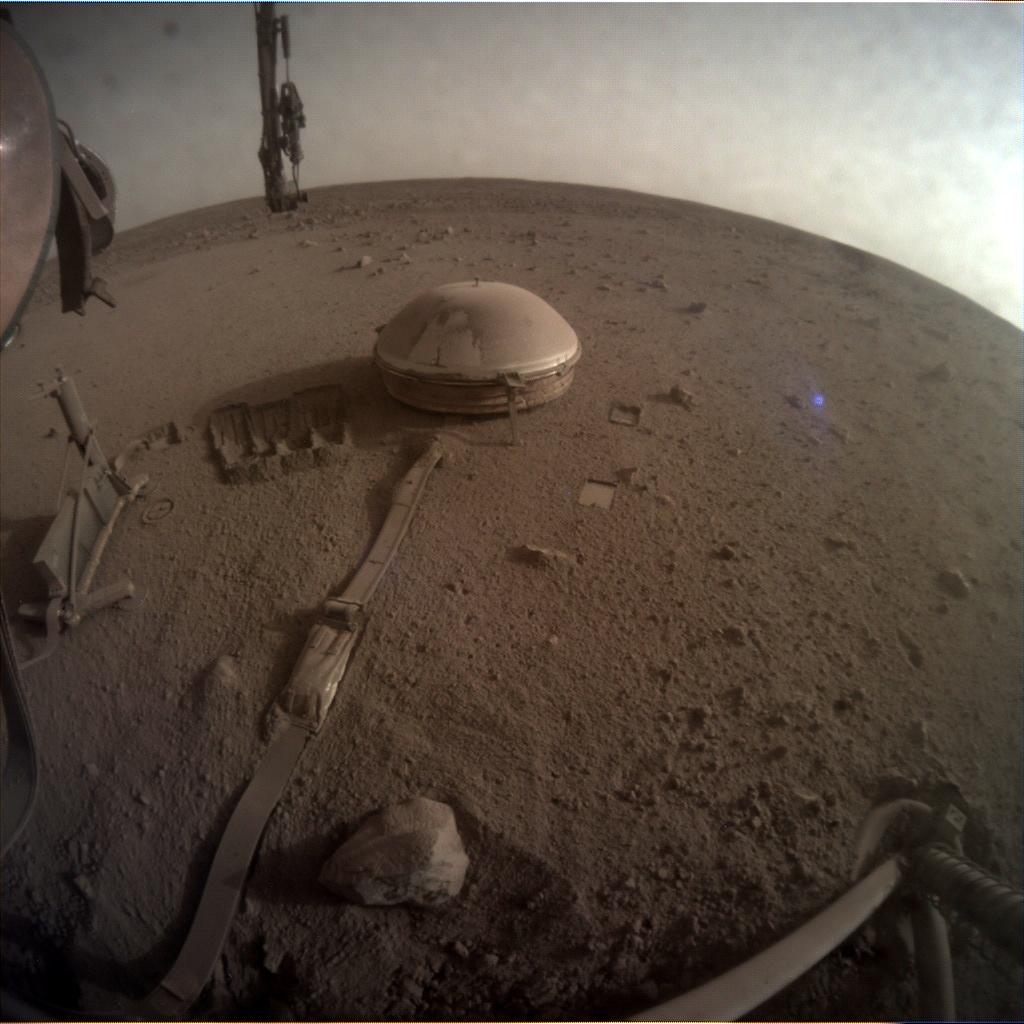
Image of the surface of Mars taken by NASA’s InSight Mars Lander on December 11, 2022. 2
The topic of life on Mars has been popularly debated and researched for decades, even leading to David Bowie creating a song literally called, “Life on Mars.” Mars has a lot of similarities to Earth, and there is evidence to suggest that Mars may have, at one point in time looked much different than it currently is, harboring liquid water on its surface, and even oceans. In fact, as of today, evidence from NASA’s InSight Lander suggests that there are large reservoirs of water beneath the Red Planet’s surface.3 Water is a key ingredient to life as we know it on Earth, so this is a significant discovery in the search for extraterrestrial life. However, this is not the only discovery suggesting possible past life on Mars.
NASA’s Curiosity Rover has previously discovered methane on Mars. This discovery was significant because most of Earth’s methane is produced by lifeforms, and although there are non-biological forms of methane production, this is still a significant discovery in the search for life on Mars, since this methane could be produced by life.4 Another discovery which suggests that Mars may have been habitable at one point is the discovery of sulfur on Mars, a building block of life.5
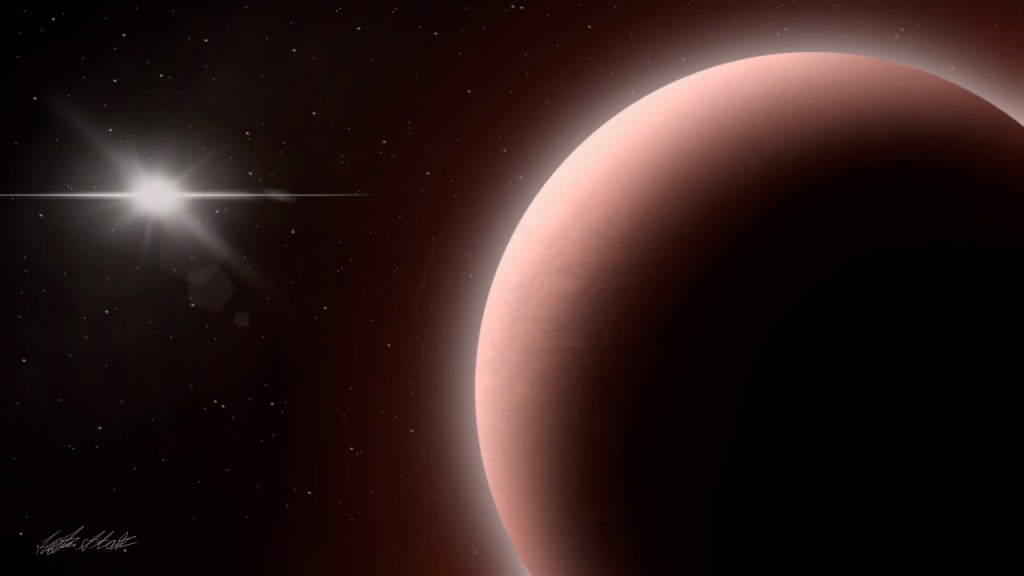
Artwork of Mars made by Justin Stout
Although there is currently no direct evidence of life on Mars, these discoveries are very significant in searching for extraterrestrial life on the Red Planet. To this day, researchers are still looking into the possibility that Mars may have, at one point in its history, had some sort of microbial life, and this search will likely continue for many years to come.
 Delaware Space Observation Center
Leave a comment